


Discover the Casentino Valley
The Casentino Valley lies north of Arezzo and appears as a mosaic of natural wonders and picturesque villages. The valley is home to the famous Casentinesi Forests National Park, a true jewel of Italy, appreciated internationally as well.
Walking through its dense forests, you can sense the history and mystery that permeate these lands: from majestic chestnut trees to legends such as the Badalischio and the brave warrior Telda. These lands were also part of Dante Alighieri’s life, as he found refuge and inspiration here and bravely took part in the Battle of Campaldino near Poppi…
Poppi
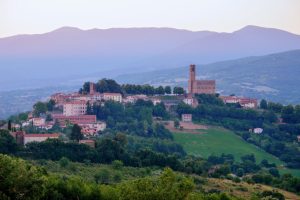
Poppi is listed among “The Most Beautiful Villages in Italy”. At the center of the village stands the imposing Castle of the Guidi Counts, overlooking the town and the surrounding green hills. Settled in the 12th century, the Guidi family was responsible for the construction of this and other castles throughout the Casentino.
Its elevated position offered an unmatched viewpoint, making it a place of great military value. Even in Roman times, the area was appreciated for its strategic geographic features. It is no coincidence that “Poppi” is believed to derive from “POPLO,” meaning “hill” or “rise.” But the wonders of Poppi do not end with the Castle. Inside, you can discover a detailed model of the Battle of Campaldino.

Camaldoli, among the Casentino mountains
When it comes to sacred art and architecture, Camaldoli, a small village in the municipality of Poppi, is a true gem. Nestled among the peaks of the Apennines, Camaldoli offers numerous attractions. In particular, the Hermitage of Camaldoli, founded in 1027 by Saint Romuald, seems to emerge from the Casentino forests as a place suspended in time, filled with spirituality and mystery. Camaldoli, however, is not only about meditation and spirituality. Here, nature walks quite rightly end with local delicacies. Among them stands out the famous Camaldoli flatbread, renowned throughout the valley and fondly remembered by anyone who has had the pleasure of tasting it.
Pratovecchio and Stia: the Casentino Valley among past and modernity
Among the wonders of the Casentino, Pratovecchio and Stia certainly hold a place of honor. Like Poppi, this region still bears the marks of the Guidi Counts. In Romena, the ancient Castle, or rather what remains of it, tells a story of border struggles, bandits, and knights.
Not far away, you will find the beautiful Pieve di San Pietro, or simply the “Pieve of Romena,” said to have been built for Matilda of Canossa. This sacred place, restored after a tragic collapse, is a precious treasure of the Casentino Valley. In Stia, on the other hand, the past blends with the present: from Porciano Castle to the Palagio Fiorentino. And we must not forget the Wool Art Museum, housed in the old wool mill after years of abandonment and disuse.
The Pieve of Romena
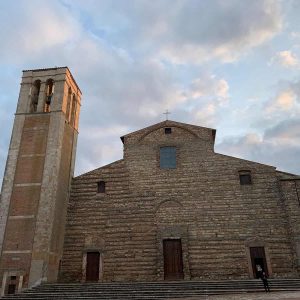
The Pieve of Romena (Pieve di San Pietro) stands at the foot of Romena Castle, in the territory of Pratovecchio-Stia, and is one of the most significant examples of Romanesque architecture in the Casentino. Built of local stone, it features a simple façade and a compact bell tower, elements that reflect the religious and community function of the church in the Middle Ages.
Over the centuries, the building has undergone several reconstruction works, particularly after a landslide in the 17th century and an earthquake in the 18th century, which altered the original structure by shortening the nave.
Despite this, the interior still preserves a three-aisled layout with a single apse, maintaining a simple and recognizable architectural balance. The Pieve of Romena is an interesting stop for visitors to the Casentino Valley who wish to explore the area through its most authentic historic sites.

The village of Soci in the municipality of Bibbiena
In the context of the history of wool processing, it is essential to mention Soci, a hamlet of the picturesque village of Bibbiena. Here, since the Middle Ages, tanning and spinning arts have flourished, leading to the creation of a unique product still known today. The famous Casentino Cloth, made through the distinctive “carding of wool,” once done by hand with thistle spines, has gained international fame. Today, from Soci, this fabric is exported all over the world!
Casentino Valley: not only architectural wonders
The Casentino has much more to offer than can be described in a short text like ours. You will certainly see us talk more about these lands, but for now we cannot overlook the incredible culinary heritage of the Casentino. Located where the Lombard border once stood, the area boasts a blend of different culinary traditions, ranging from stuffed pasta to fresh pasta, with distinctive and unique products. For example, in Cetica you will find a type of potato famous worldwide. Moreover, we must suggest that you do not miss the chance to taste the delicacies made from Casentino Grey, a D.O.P. pig breed whose flavor is magnificently enhanced by the hands of local Casentino cured meat producers.
Casentino: discover the magic of this extraordinary valley
The Casentino is a window into ancient and Renaissance Tuscany, far too vast to be fully described in just a few words. It deserves to be experienced in person. By continuing to browse our articles, you will discover other hidden wonders of this region and more things to see in the Casentino Valley. You will be amazed not only by its idyllic beauty and its historical and cultural value, but also by its delicious food and wine specialties.
Antiche Mura: the ideal starting point for a trip to the Casentino Valley
Staying at Antiche Mura means choosing a comfortable and central base for exploring not only the city but also the entire surrounding area. Arezzo is in fact located in a strategic position that makes it easy to reach the Casentino Valley, with its villages, forests, and sanctuaries immersed in nature, as well as the Valdichiana and the Valdarno, rich in rolling landscapes, wineries, and small historic towns.
After a day among Romanesque parish churches, castles, trails, and thermal baths, returning to Arezzo allows you to combine the liveliness of an art city with a cozy and comfortable stay. Antiche Mura thus becomes the ideal balance point: sleep in the historic center, travel easily by car to the valleys of the province, and enjoy a varied experience made of culture, nature, and local traditions, without changing accommodation every day.